A bathroom that depends on a pump needs an ownership plan as well as an installation plan. Keep the equipment accessible, follow the instructions for its exact model, understand which fixtures depend on it, and retain the operating and service records. There is no universal replacement interval or backup-power answer that applies to every sewage system.
Keep access in the finished-room plan
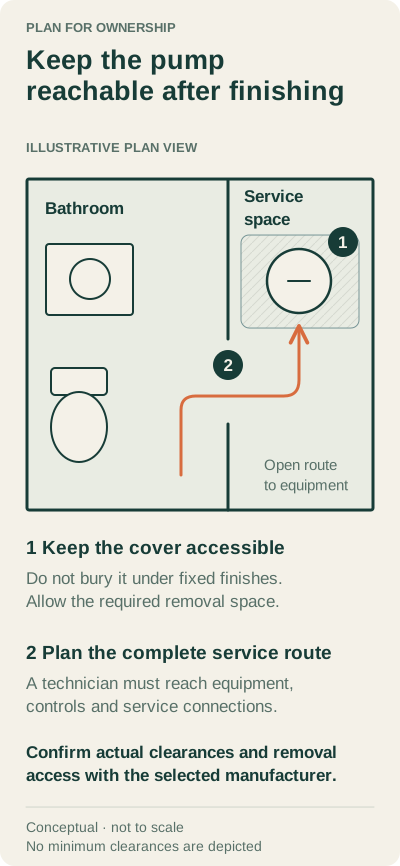
Ask how a technician will reach the cover, controls, valves and equipment connections, and how the pump can be removed when service is needed. Review that route before cabinets, shelving or permanent finishes are built. An access panel that can open is only part of the question; the work and removal space also need to be suitable for the selected equipment.
Liberty’s simplex sewage and grinder-system manual illustrates product-specific access arrangements and directs qualified personnel to perform equipment and electrical work. Use the manuals supplied with the installed pump, controls and alarm rather than assuming one basin illustration covers every component.
What care schedule should you follow?
Record the manufacturer’s model-specific instructions and ask the installer which checks the homeowner should perform and which require service personnel. Equipment type, controls, use and installation conditions can differ. An interval copied from another product is not a substitute for the correct manual.
Do not open a sewage basin or handle energized equipment to investigate a noise or alarm. Keep the service contact and equipment details accessible so a qualified technician can identify the system. This guide does not provide maintenance procedures for an unknown installation.
What should go into the system?
Use the fixture and pump instructions for permitted waste. Avoid treating “macerating” or “grinder” as permission to dispose of wipes, hygiene products, food waste or other materials through a toilet. Saniflo’s published FAQ specifies human waste and toilet paper for the macerating products it names; the exact installed model remains the reference.
For wet bars and laundry, verify that the selected equipment is intended for those fixtures and operating conditions. A bathroom system is not automatically suitable for every appliance discharge. See wet-bar and laundry plumbing for the connection questions.
What happens during a power interruption?
If the drainage pump cannot run, its served fixtures cannot be assumed to remain usable. Ask the installer to identify those fixtures and provide the equipment-specific response to power loss or a fault. Stop adding wastewater to a system that is unable to move it and follow its operating instructions.
An alarm can indicate a problem without moving any wastewater. For example, the Sanialarm product description describes a battery-operated alarm accessory. That does not establish battery-powered operation for the connected macerator. Backup power, controls and pump compatibility must be evaluated together for the actual equipment.
Do not assume a groundwater-sump backup product can operate a sewage pump. Ask for a written compatibility and operating explanation if backup power is proposed, including which functions remain available and which do not.
How should noise and changes in operation be handled?
At handover, ask what normal cycling and sound are like for the installed equipment. Keep a record of the model and the fixtures it serves. If behavior changes, communicate what you observed and when it occurs rather than guessing a cause or repeatedly testing a struggling system.
Unusual operation, odors, leakage or an alarm need assessment appropriate to the equipment and condition. Do not rely on a generic troubleshooting sequence for a different pump. The drainage-options guide explains why similar-looking systems can work differently.
Keep a usable equipment record
Save the manufacturer, model, serial number, installation date, installer information, manuals, applicable inspection records and warranty documents. Include the identity of the pump, basin, control and alarm where they are separate products. Note which fixtures depend on the system and the service-access route.
Use the completion and equipment worksheet to keep those details together. Retain approved changes and photographs of concealed piping where available. These records help future service and avoid rebuilding the system’s history from memory.
For a proposed installation, review sewage ejector project scope and request access and handover details in the bid. The complete basement plumbing guide covers the decisions leading up to equipment selection.